Salone Del Futuro: Renewing Milan CDC to Support Small Businesses

A service-space system for the Milan Chamber of Commerce that supports micro and small enterprises through structured training, institutional coordination, and participatory learning.
- Role: Service Designer and UX/UI Designer (Co-creation Concept, Spatial-Service Integration, App Design, and Graphic Design)
- Duration: Term-long Design Studio
- Team: Academic collaboration
- Methods: Field research, system mapping, stakeholder engagement
- Outcome: Service-space system concept for Milan Chamber of Commerce
Project Background
Micro and small enterprises account for over 99% of all companies in Italy, yet they are often the most vulnerable when facing technological, regulatory, and market changes. While the Milan Chamber of Commerce (CdC) provides a wide range of services, existing support mechanisms are often fragmented and difficult to translate into actionable practice.
The project originated from the renewal concept of the CdC’s interior spaces, which prompted a broader reflection on how physical environments could support new forms of institutional engagement. Rather than treating the spatial redesign as an isolated architectural intervention, the project explored how training could be repositioned as a strategic service—integrating space, digital touchpoints, and organizational processes into a coherent service system.
This approach framed the interior renewal as an opportunity to rethink how the CdC supports micro and small enterprises through participation, experimentation, and long-term capability building.
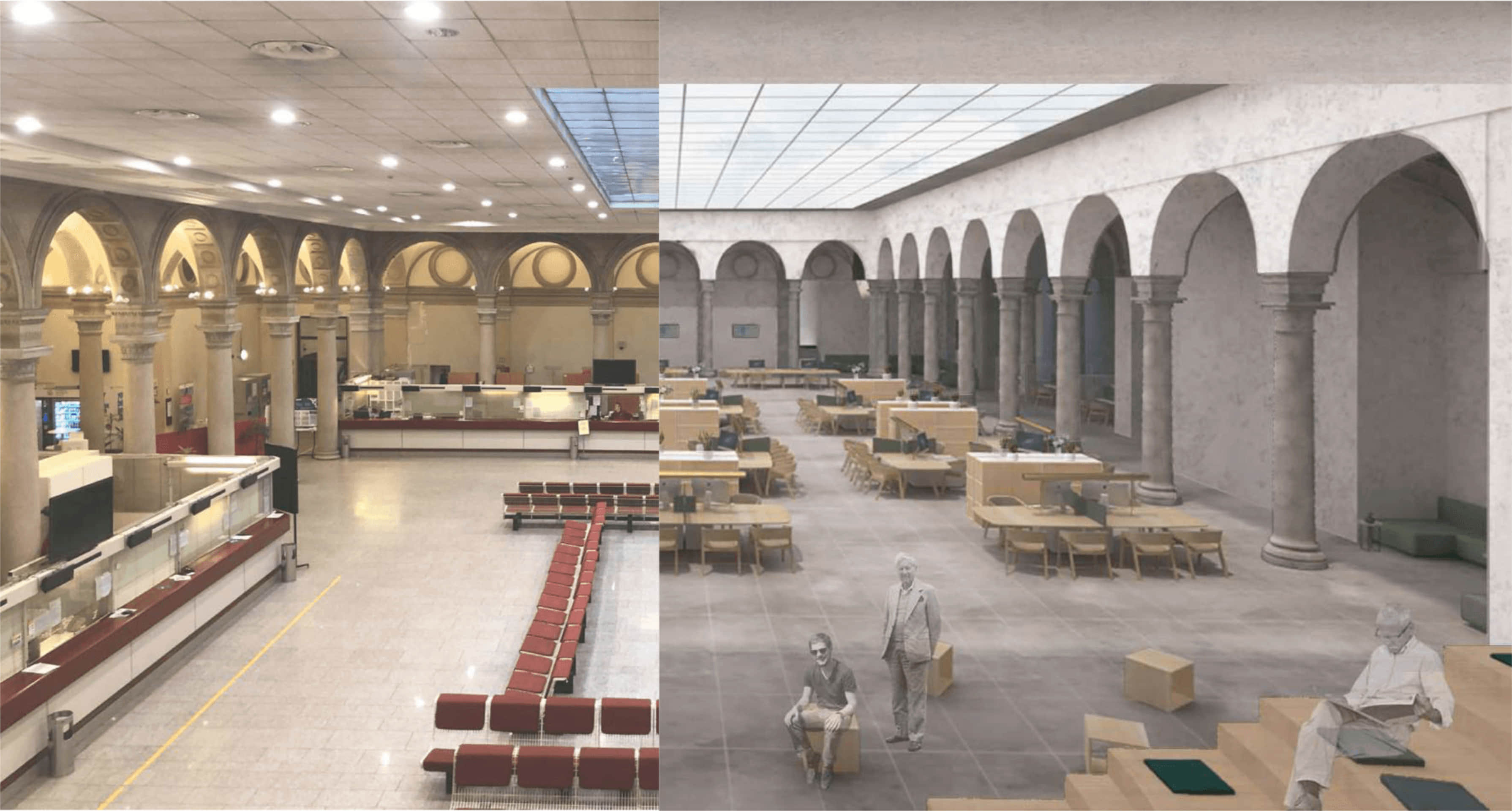
The Renewal Concept of the Milan Chamber of Commerce.
The Interior Renewal Concept
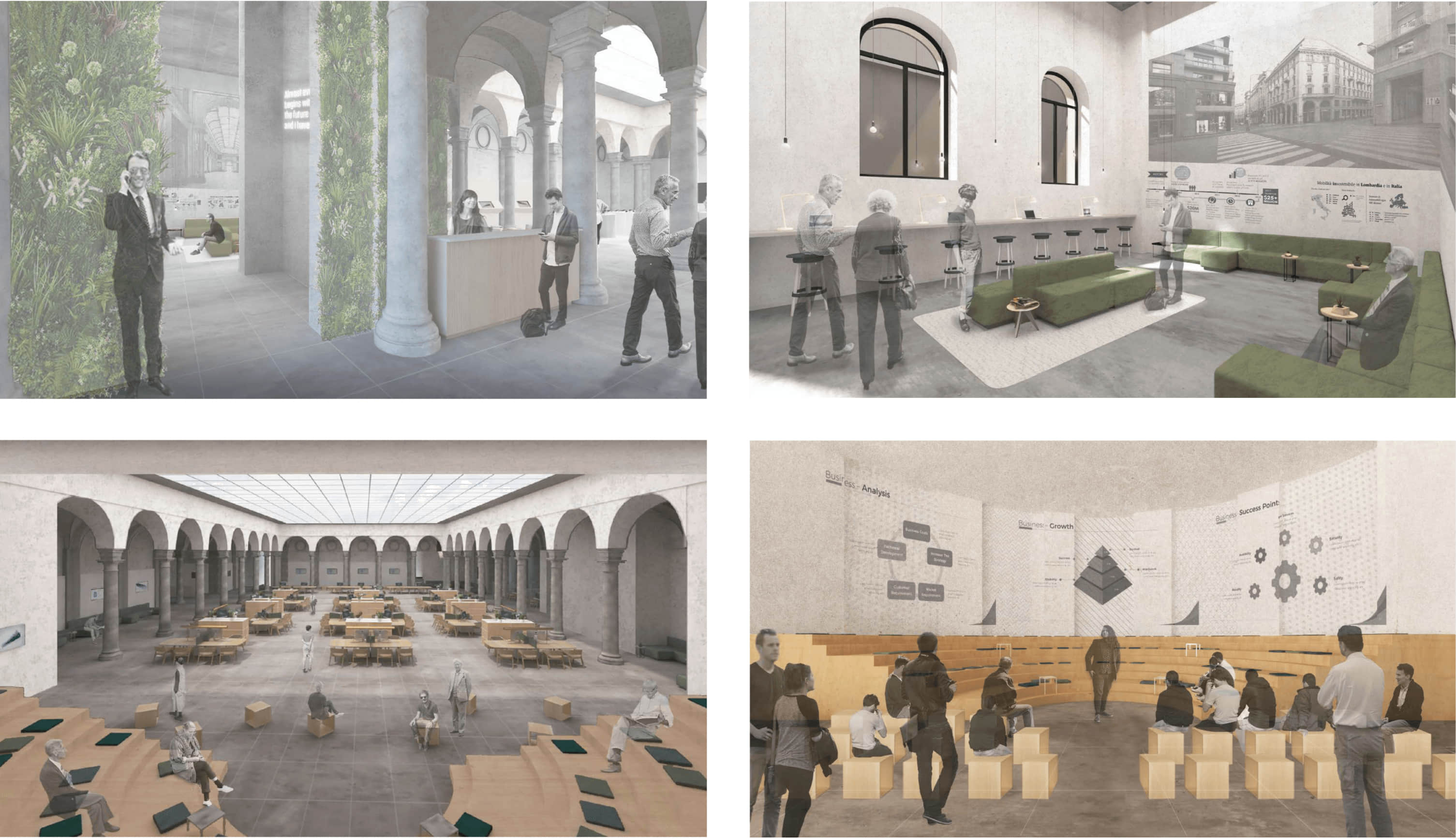
Some rendering of interor renewal.
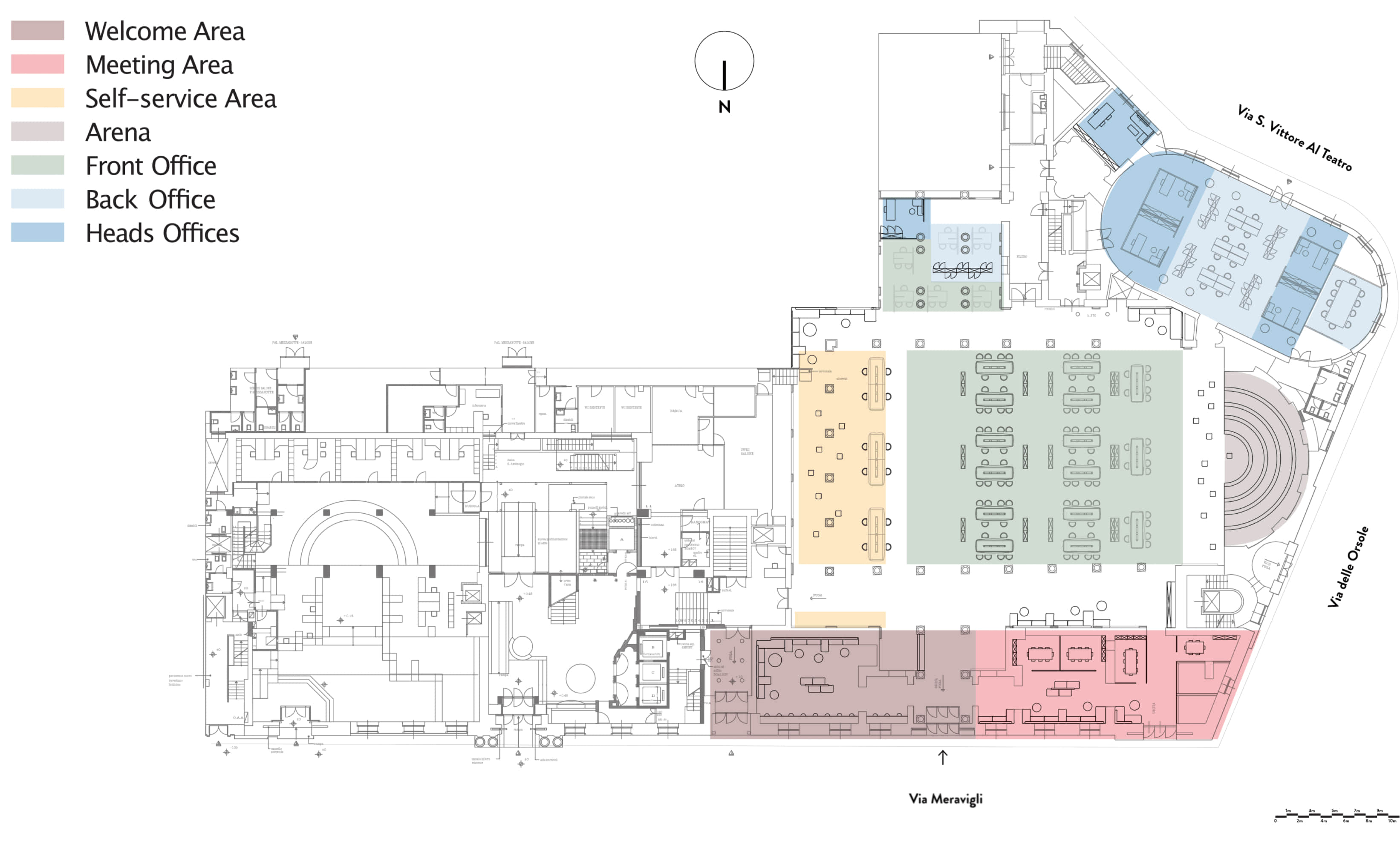
Map of renewal concept of the Salone del Futuro.
Research & Framing
The project was framed as an exploration of training as a service system rather than a standalone offering. Research focused on understanding both the Chamber’s institutional structure and the needs of micro and small enterprises, with particular attention to how practical learning, collaboration, and experimentation could reduce resistance to change and increase engagement.
Key Insights
-
Micro and small enterprises do not primarily lack information; they lack confidence and practical ways to engage with change. Training therefore needs to be experiential rather than purely instructional.
-
Learning is most effective when embedded in collective activities such as simulations, group work, and shared reflection, rather than individual classroom settings.
-
Spatial design plays a critical role in shaping participation, enabling transitions between focused learning, collaboration, and public sharing.
Service Concept: A Training Network
The proposal introduces a training service ecosystem coordinated by the Milan Chamber of Commerce. A dedicated Surveying and Forecasting Lab identifies emerging trends and translates them into sector-specific training programs, developed in collaboration with universities, experts, and industry partners.
Training is delivered through a combination of digital touchpoints, physical toolkits, and spatially orchestrated experiences, guiding companies from initial exploration to shared outcomes and long-term support.
Design Concept
The service concept focuses on micro and small enterprises, addressing practical barriers that prevent them from navigating institutional processes and change.
Practical Training as the Core of the Service

The program aims to develop more resilient small and micro enterprises, offering help by Disseminating Knowledge:
- Innovations in technology, production, methods, organisations.
- New laws and regulations that may (or will) affect companies.
- Incoming trends for the current market.
- Expansion to new markets for a certain sector.
How We Get It: CdC’s New Roles
The Chamber of Commerce acts as an orchestrator, supporting the forecasting lab with institutional data and ensuring that training programs are delivered to the right companies at the right time.

Creation: Connect the External and Internal
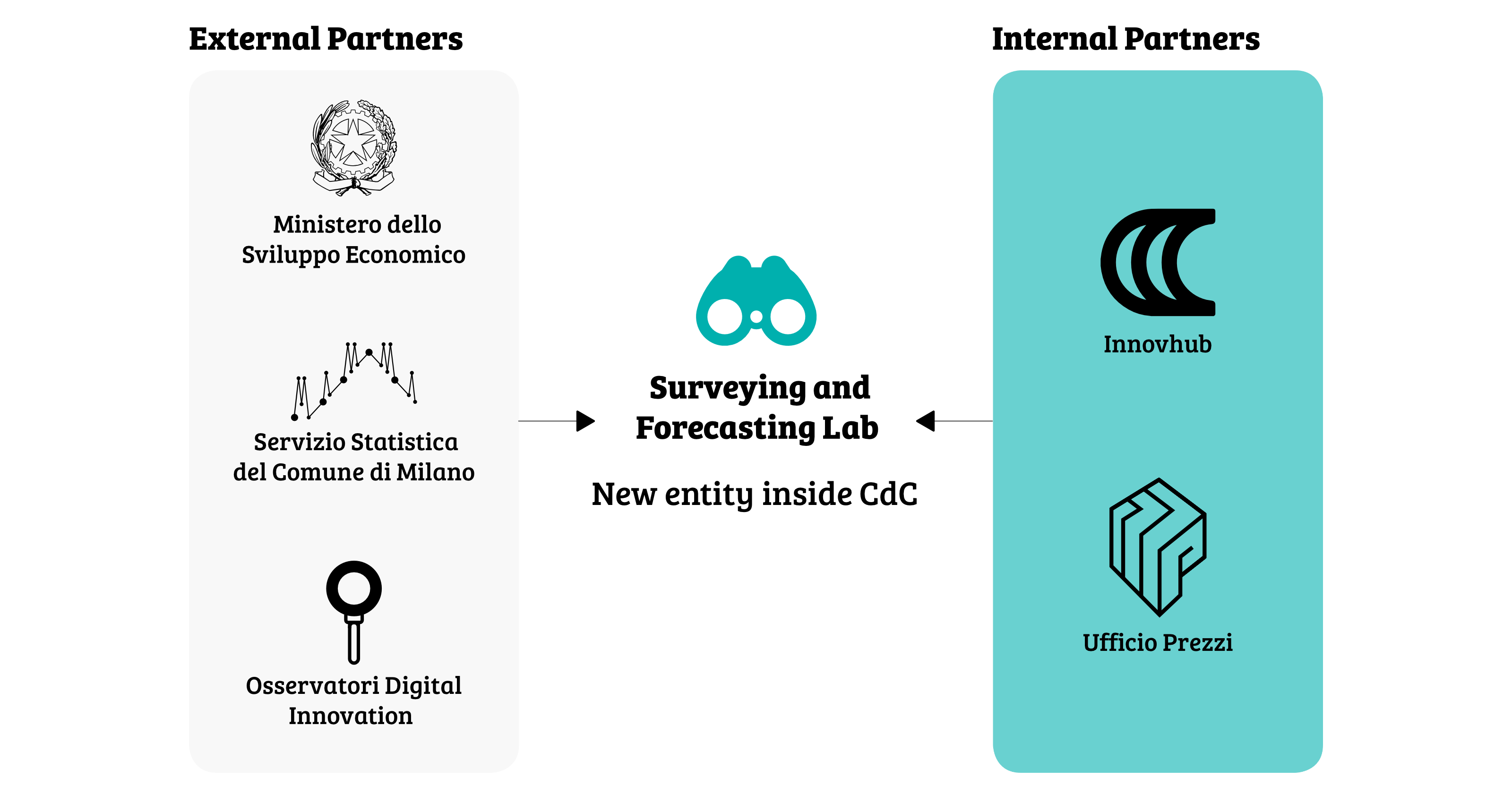
CdC’s new role of creation.
Example Scenario: Emerging Agricultural Technologies
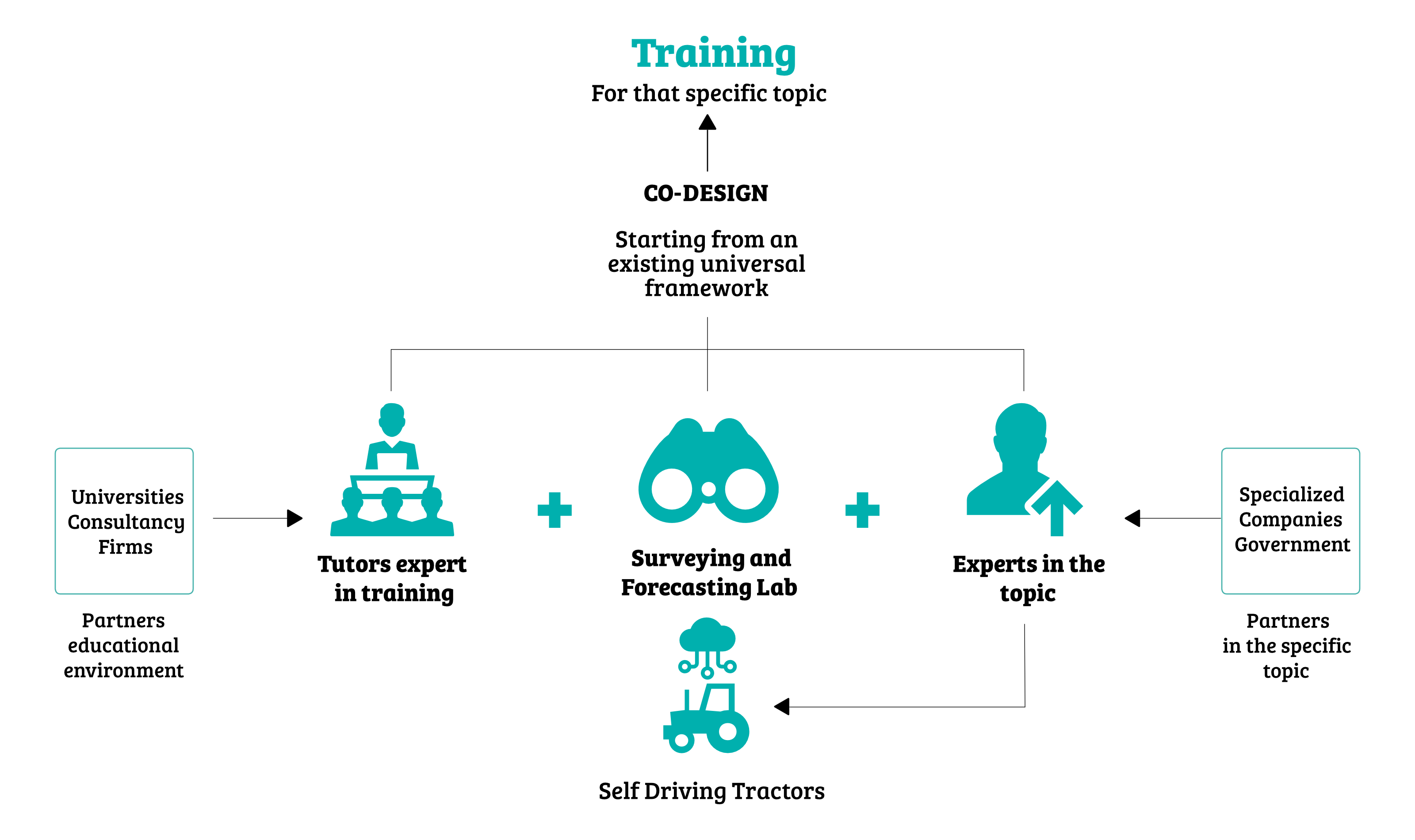
This scenario illustrates how the Surveying and Forecasting Lab identifies an emerging trend and coordinates partners to co-design a sector-specific training program.
The example demonstrates how institutional knowledge, external expertise, and company participation are connected through the service network.
Delivery: The Training Network
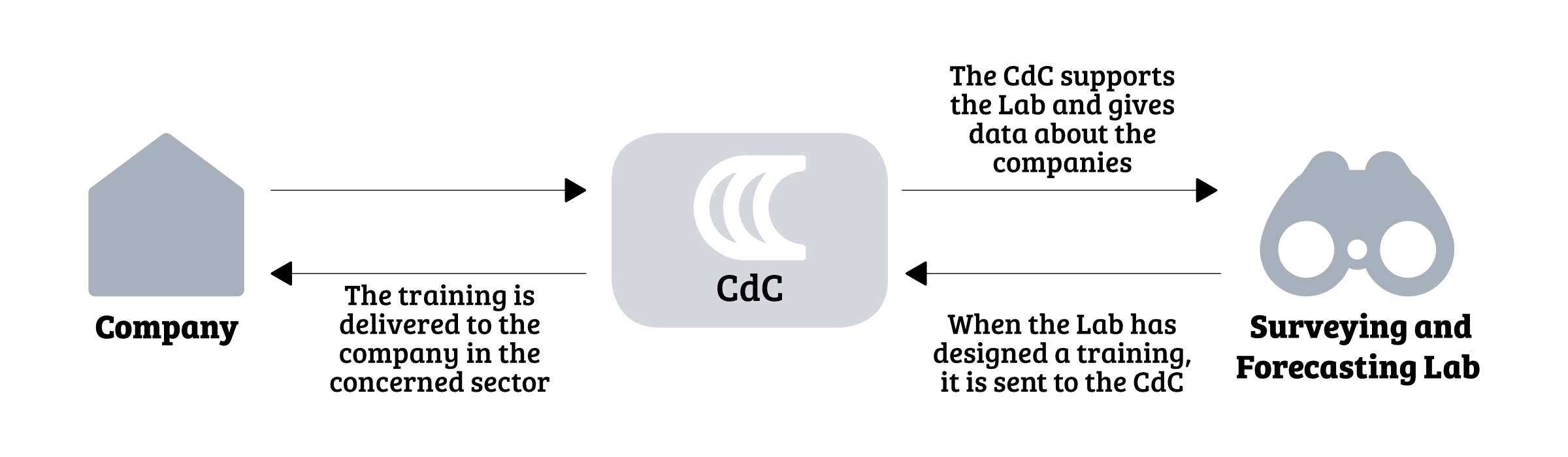
The CdC acts as the delivery hub, coordinating data, training design, and distribution between the Surveying and Forecasting Lab and companies.
Training Service: The Toolkit and the App
In our design concept, CdC also offers the training service for small businesses, facilitated by a set of tools and the App.
The Toolkit
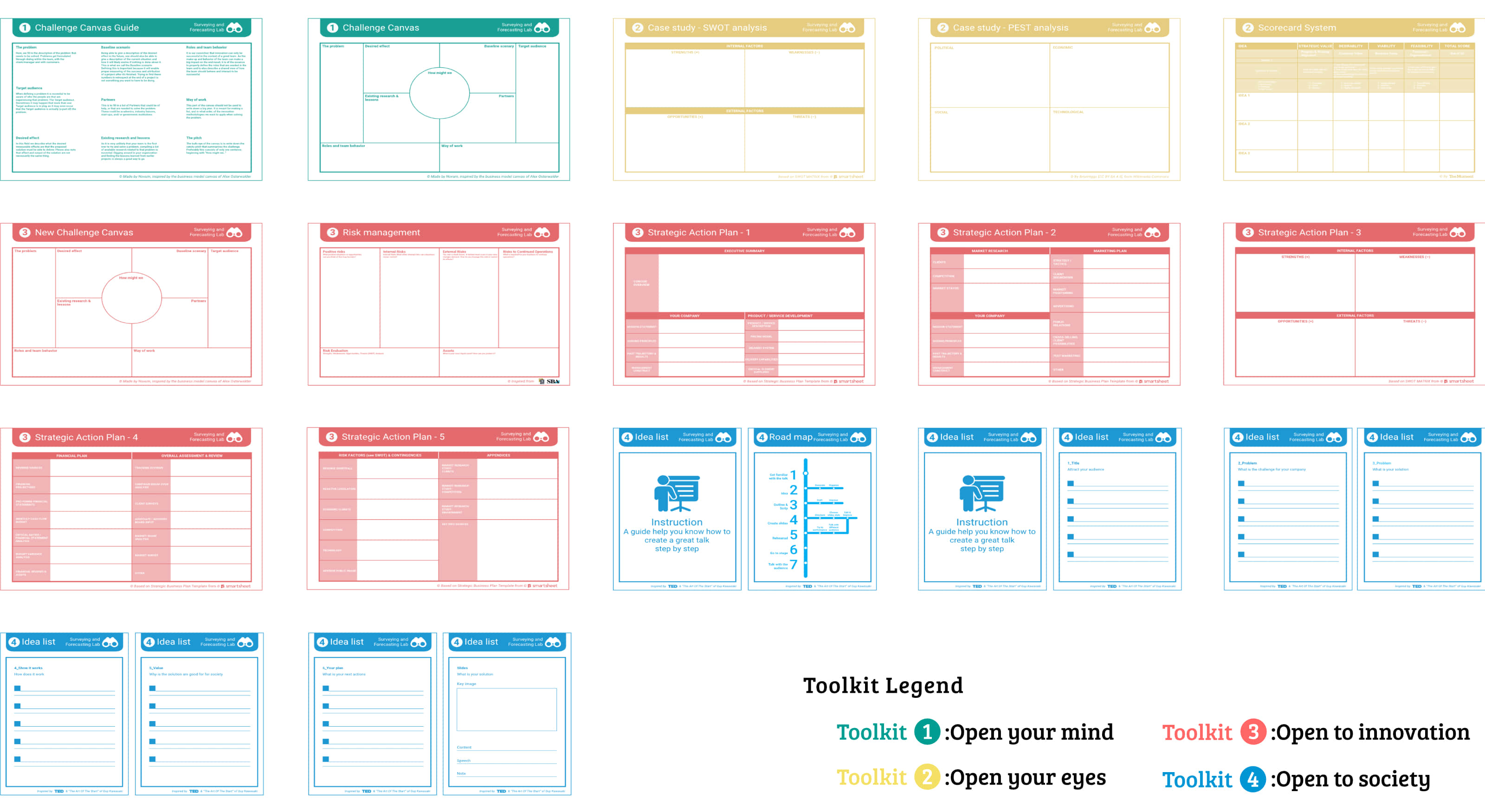
The service toolkit facilitating the Service role of the CdC.
With the service toolkit, the CdC supports training across four directions:
- Open your mind: challenge framing and strategic awareness
- Open your eyes: case studies, analysis frameworks (SWOT/PEST), and benchmarking
- Open to innovation: risk management and strategic action planning
- Open to society: idea generation and collaborative exploration
The Pocket CdC App
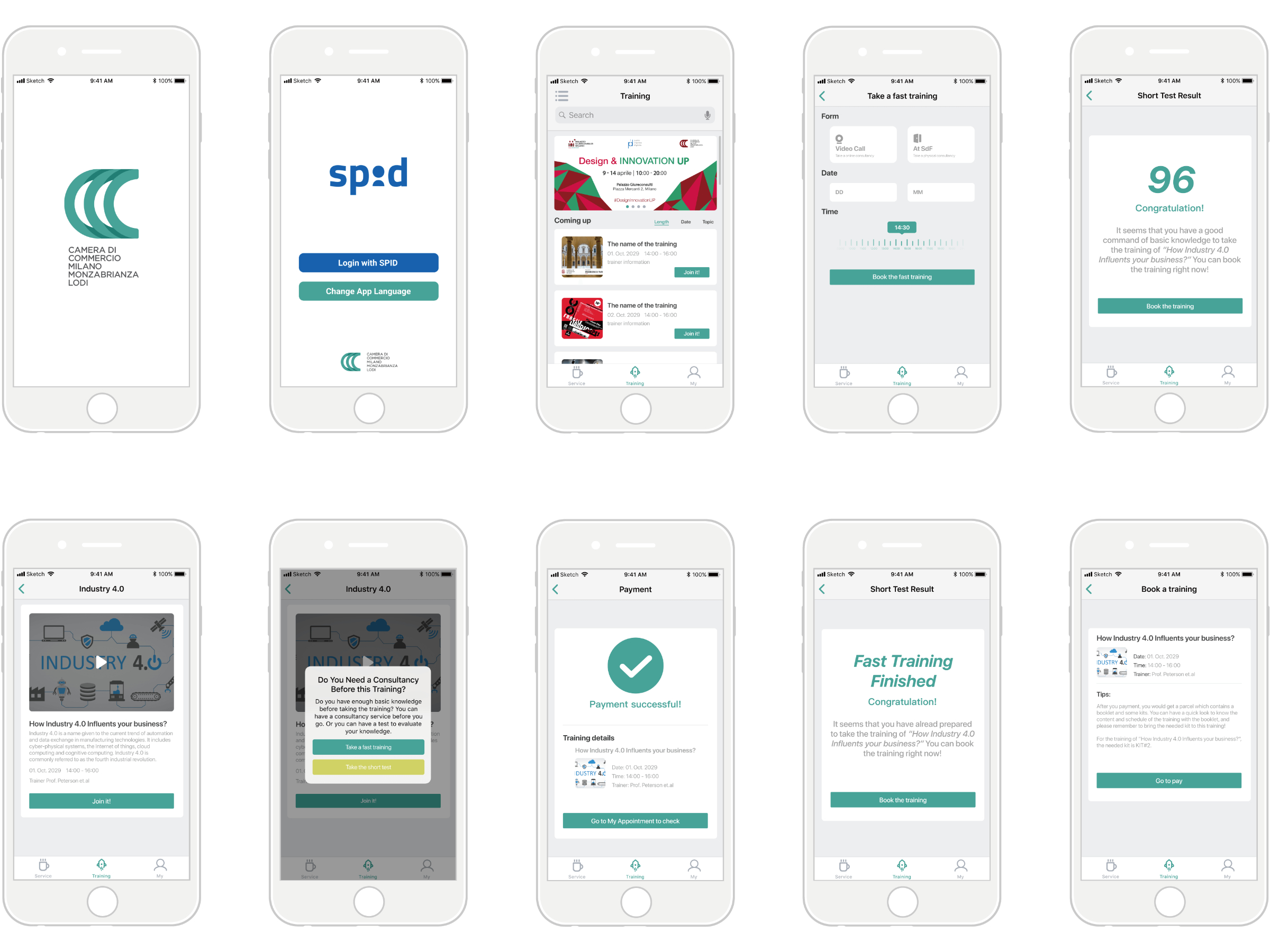
The service app coordinating the training service offer by the CdC.
Service System Map
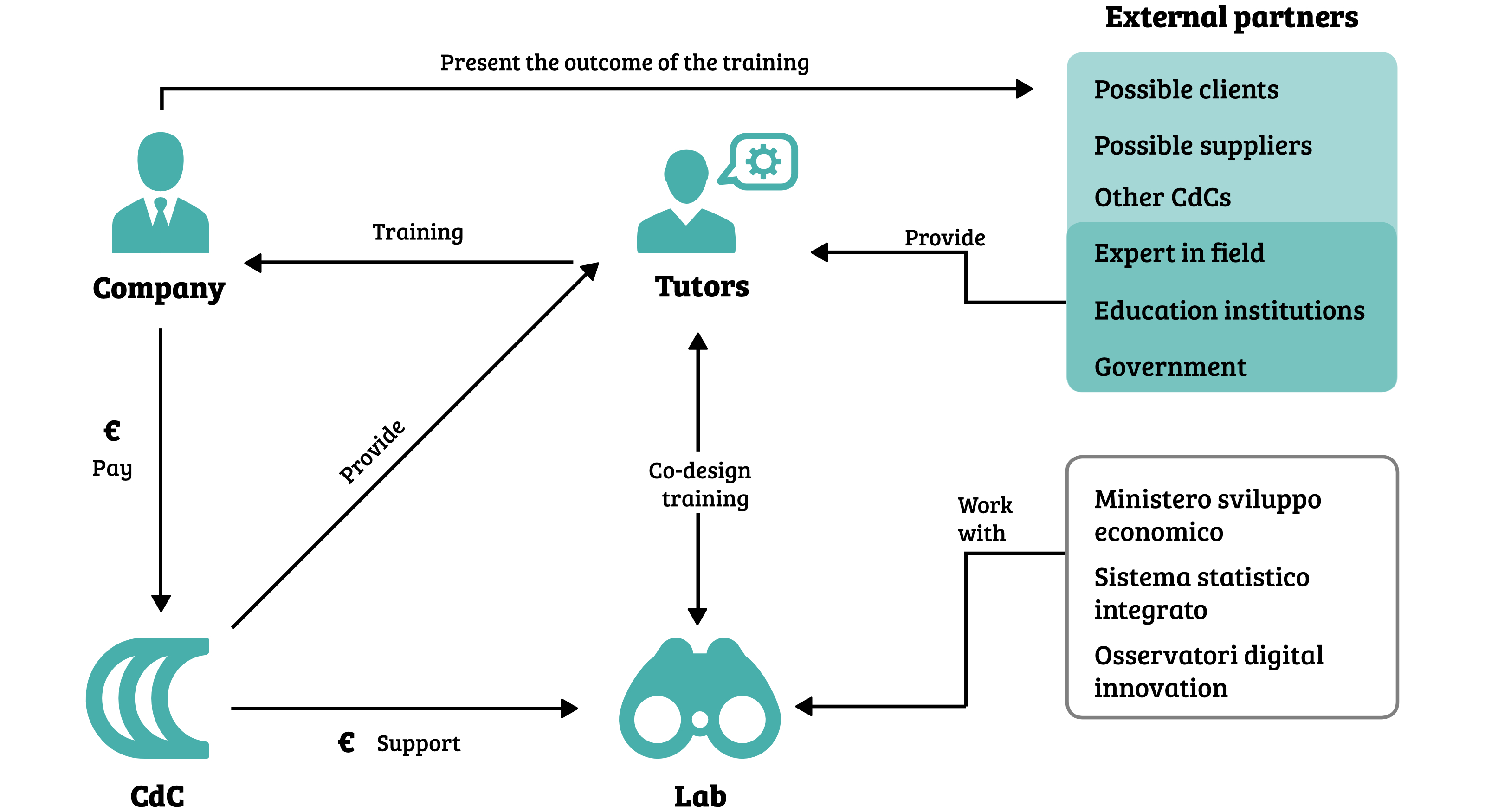
The service system map of the training service.
Operationalization of the Service
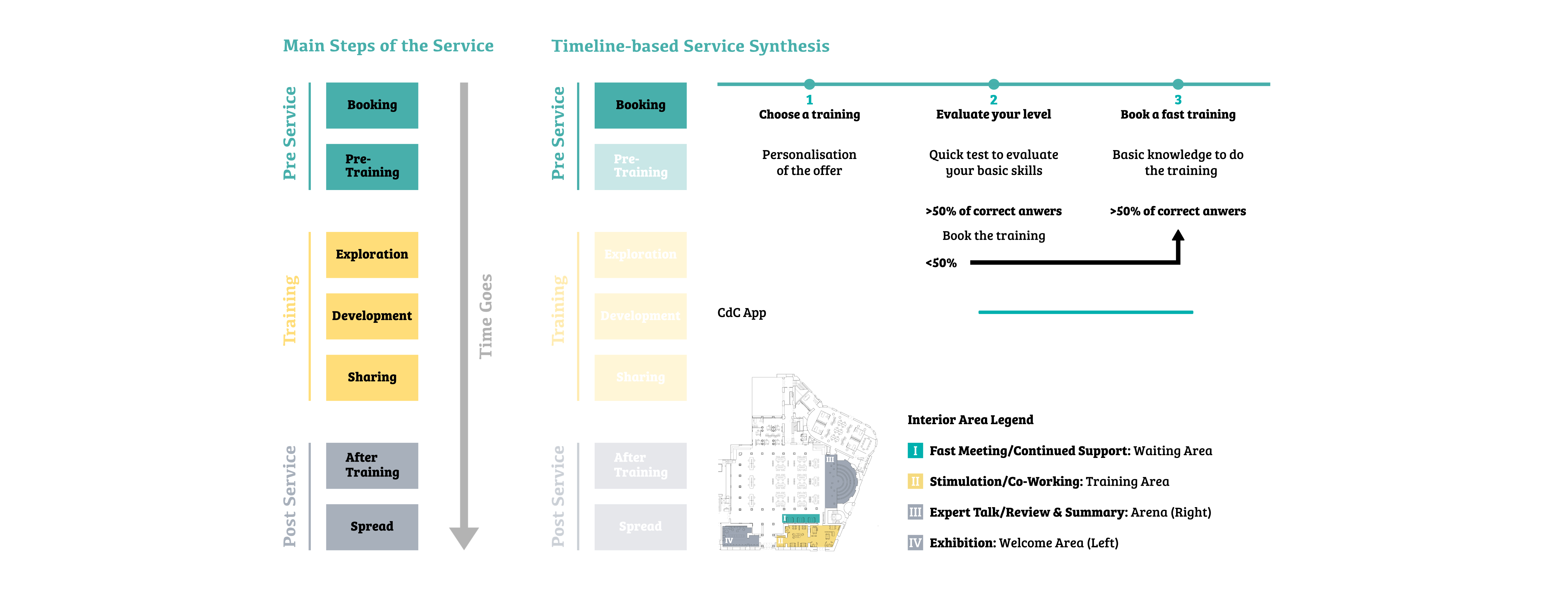
The operationalization of the Training Service (Part I).
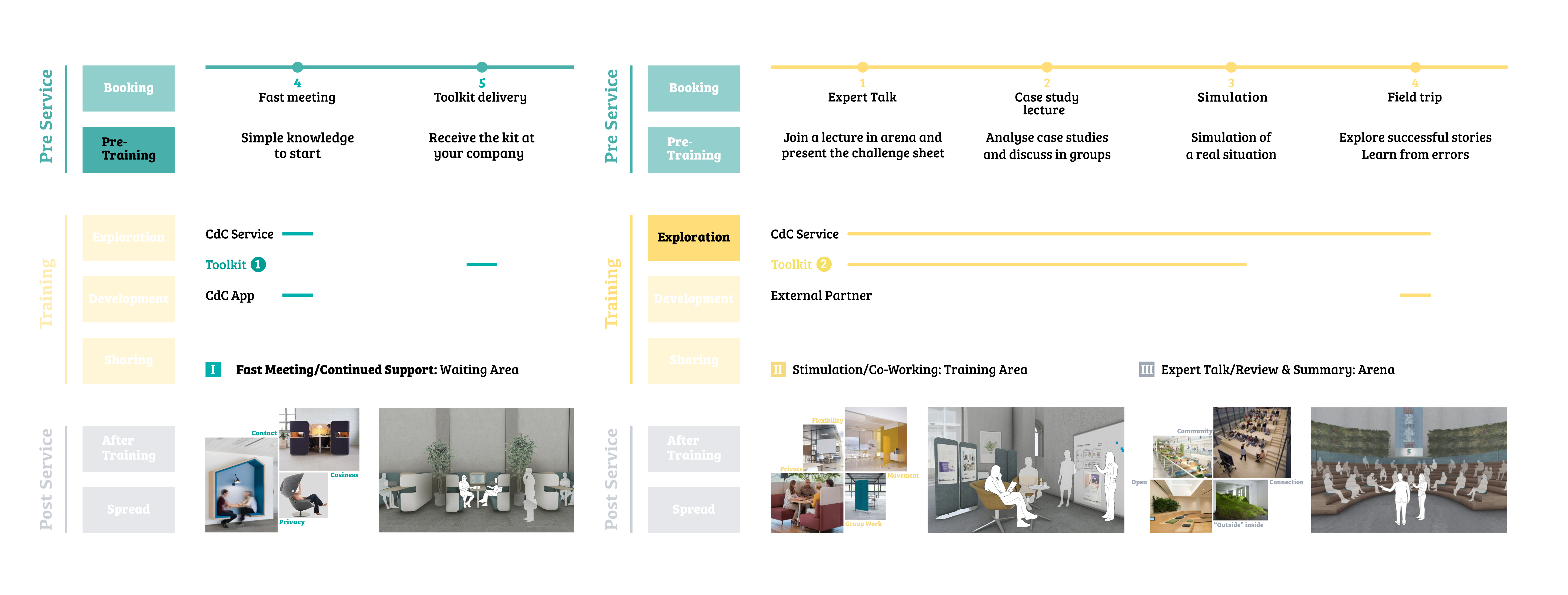
The operationalization of the Training Service (Part II).
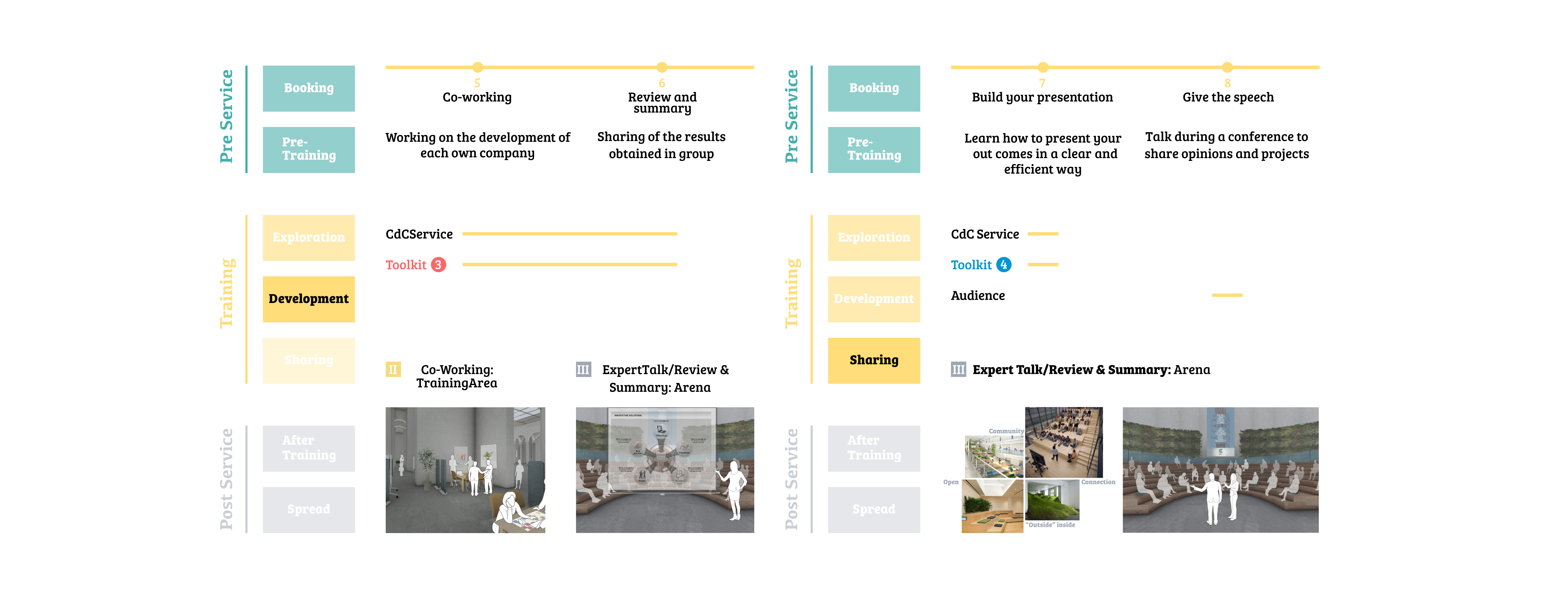
The operationalization of the Training Service (Part III).
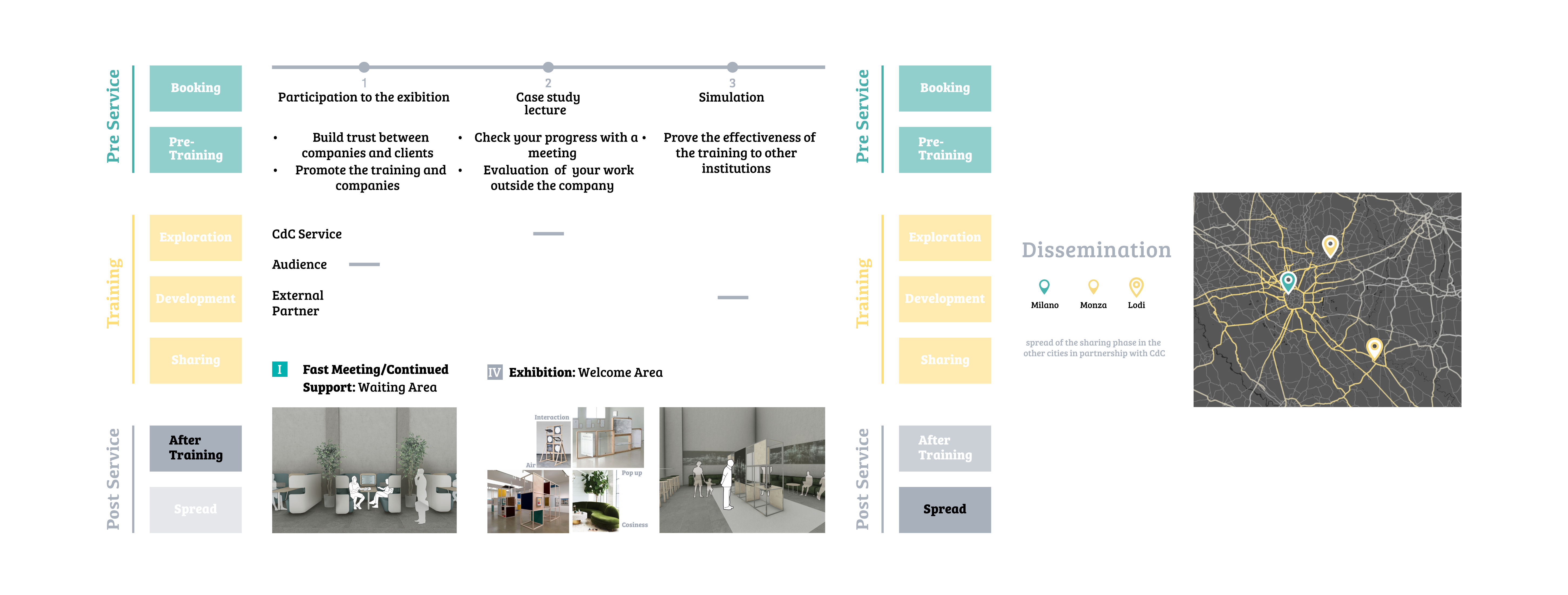
The operationalization of the Training Service (Part IV).
Service Blueprint
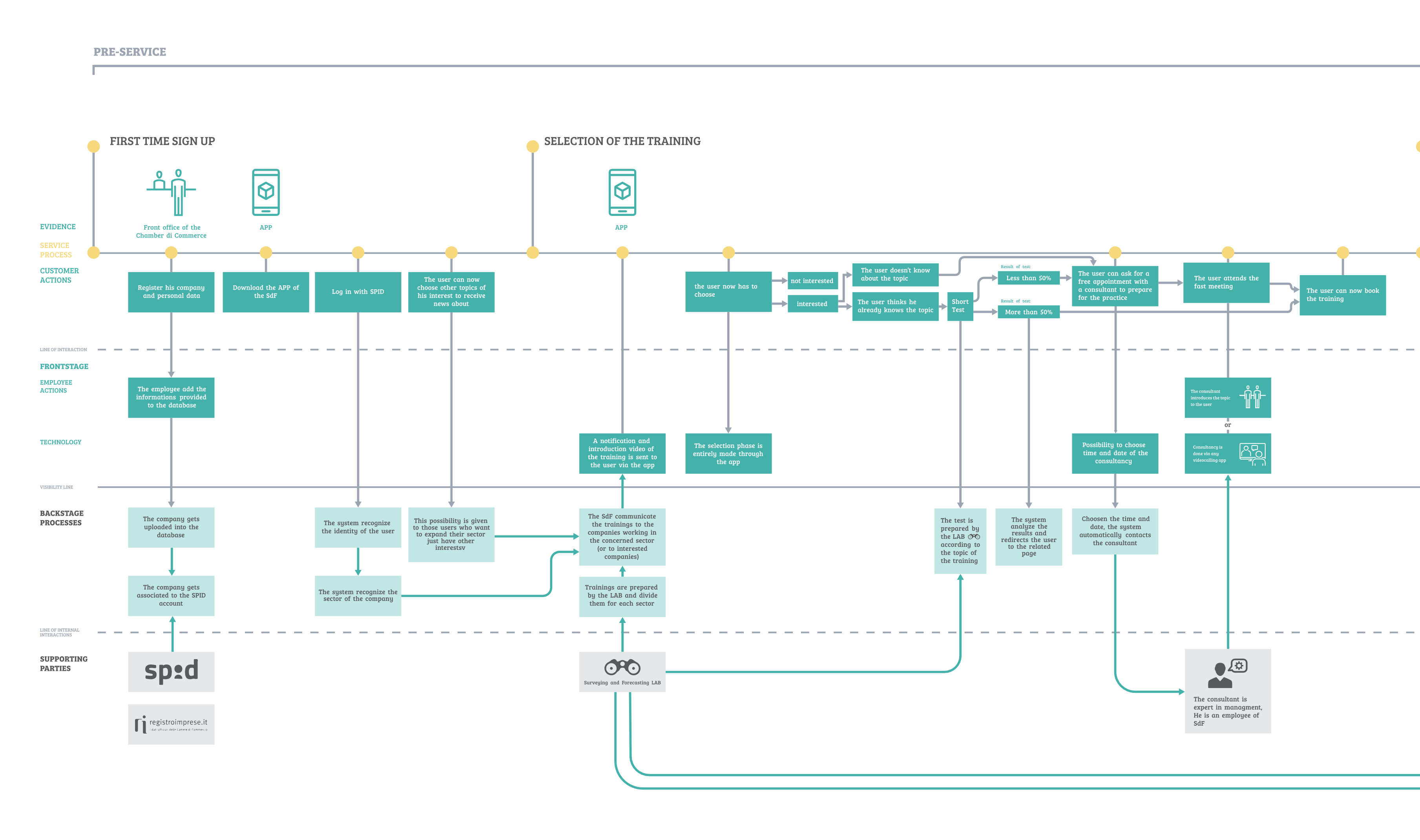
A Section of the Service Blueprint.
Reflection
This project strengthened my ability to design at an organizational and systemic level, balancing institutional constraints with participatory learning experiences. It highlighted how service design can align policy, space, and interaction to support long-term behavioral change rather than short-term efficiency.