BookHero: UX & Service Design for a Better Library System

A service-oriented redesign of a university library system that enables students to actively discover, co-construct, and engage with shared knowledge resources.
- Role: UX Designer (Research, Interaction, UI)
- Duration: 8 weeks
- Team: Individual project
- Methods: Interviews, affinity mapping, wireframing, prototyping
- Outcome: High-fidelity interactive prototype
Context
BookHero is a UX & Service Design project addressing usability issues in the university library system. The goal was to improve how students discover, borrow, and interact with library resources across digital and physical touchpoints.
Problem Statement
The existing library experience presented multiple friction points: unclear book discovery pathways, inconsistent information across digital and physical interfaces, and fragmented checkout processes. These issues caused confusion, longer task times, and poor perceived usefulness of the library system.

Some books may be ignored by students and teachers.
The Guiding Question:
How might we “save” these ignored books and cut down unnecessary waste investments?
Users & Methods
I conducted contextual user research involving 10+ library users through interviews and walk-along observations. The goals were to understand how users seek books, navigate library spaces, and engage with existing digital systems.
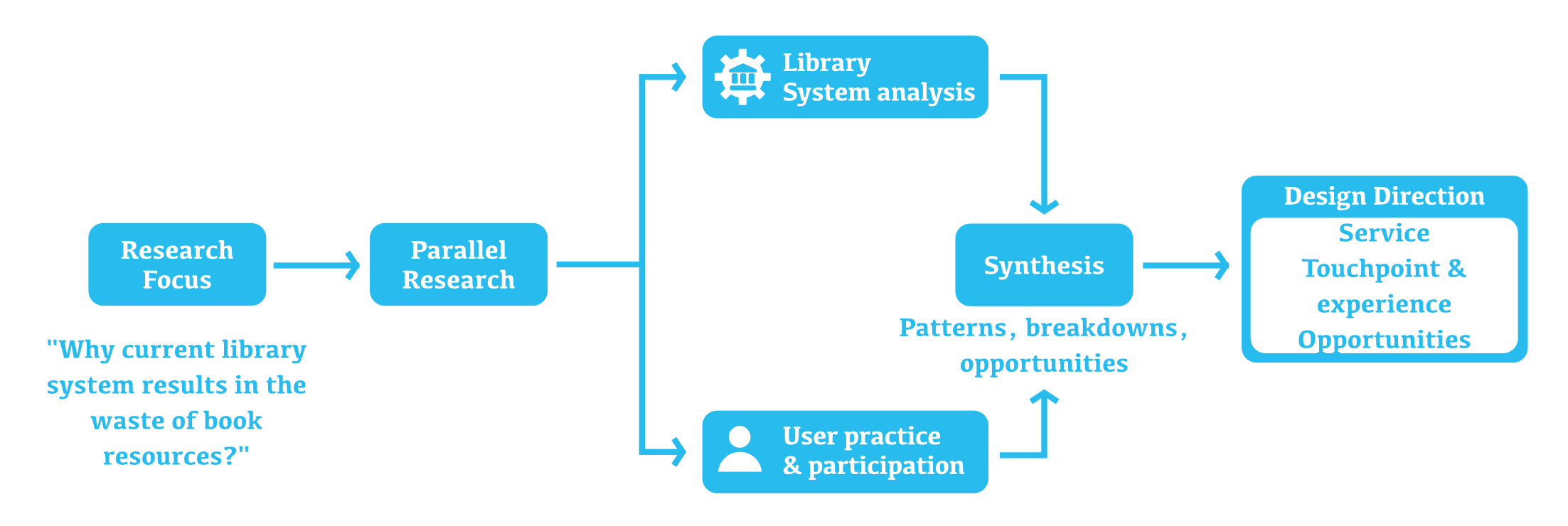
This parallel structure ensured that both institutional constraints and user behaviors informed the design strategy.
- Conducted in-depth interviews with library officials and student users to understand how institutional processes shape everyday usage practices.
- Analyzed the top 200 student borrowing records to identify predominant usage patterns and overlooked resources that reveal systemic friction.
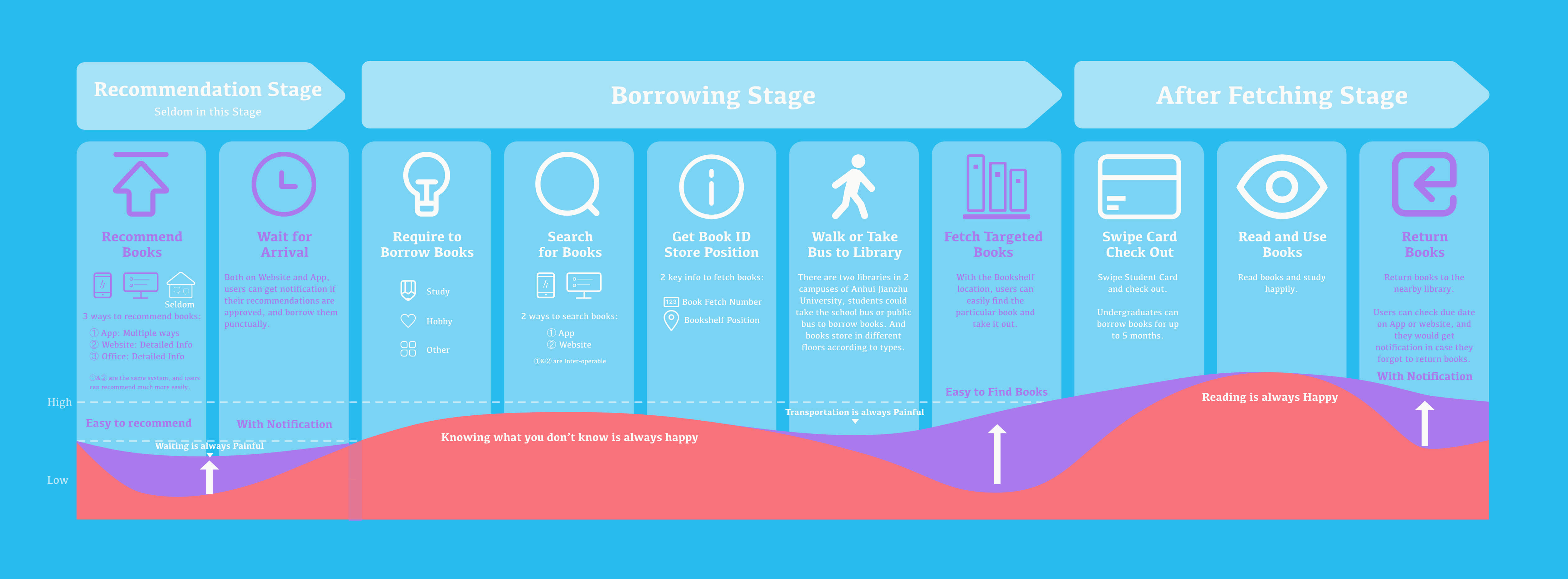
- Mapped the existing library system and user touchpoints to surface structural breakdowns and opportunities for service redesign.
These methods informed the following key insights that underpinned the design opportunities below.
Key UX Insights
Following this research strategy, we identified three core issues of the current library system:
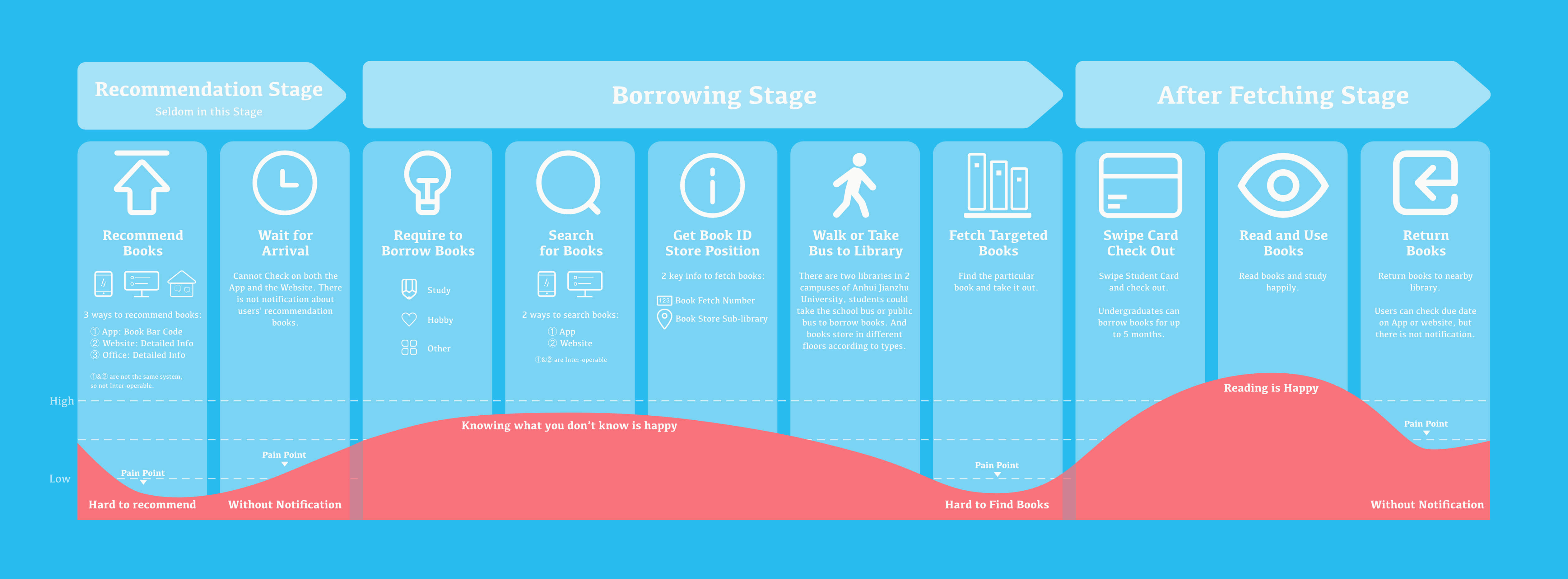
- Information Lag: Users experienced frustration when the expected book status did not match the on-shelf reality.
- Locational Friction: The transition between digital search and physical location guidance was discontinuous. Users cannot quickly find a book’s exact shelf position.
- Social Void: The extant system lacks tools for sharing, rating, and peer-reviewing books.
UX Problem Prioritization & Design Opportunities
Based on severity and frequency, we prioritized the problems that had the largest negative impact on users’ primary goals. As such, three key opportunities were identified:
Design Opportunity #1: Eliminating Information Acquisition Friction
- Strategic Goal: To solve the user pain point of “information lag” and optimize efficiency.
Design Opportunity #2: Enabling Low-Friction Resource Acquisition
- Strategic Goal: To solve the pain point of “locational friction” and provide real-time control over the borrowing process for high-efficiency users.
Design Opportunity #3: Incentivizing Community Co-Construction & Assessment
- Strategic Goal: To solve the “social void” and the “structural bottleneck” of resource contribution.
Design Principles
- Support serendipitous discovery without overwhelming users
- Balance personal control and algorithmic guidance
- Treat reading as a process, not a single action
The Design Solution
BookHero proposes a redesigned UX system that enables discovery, participation, and user-driven curation of library resources. This system includes a mobile app and a web version of the library system.
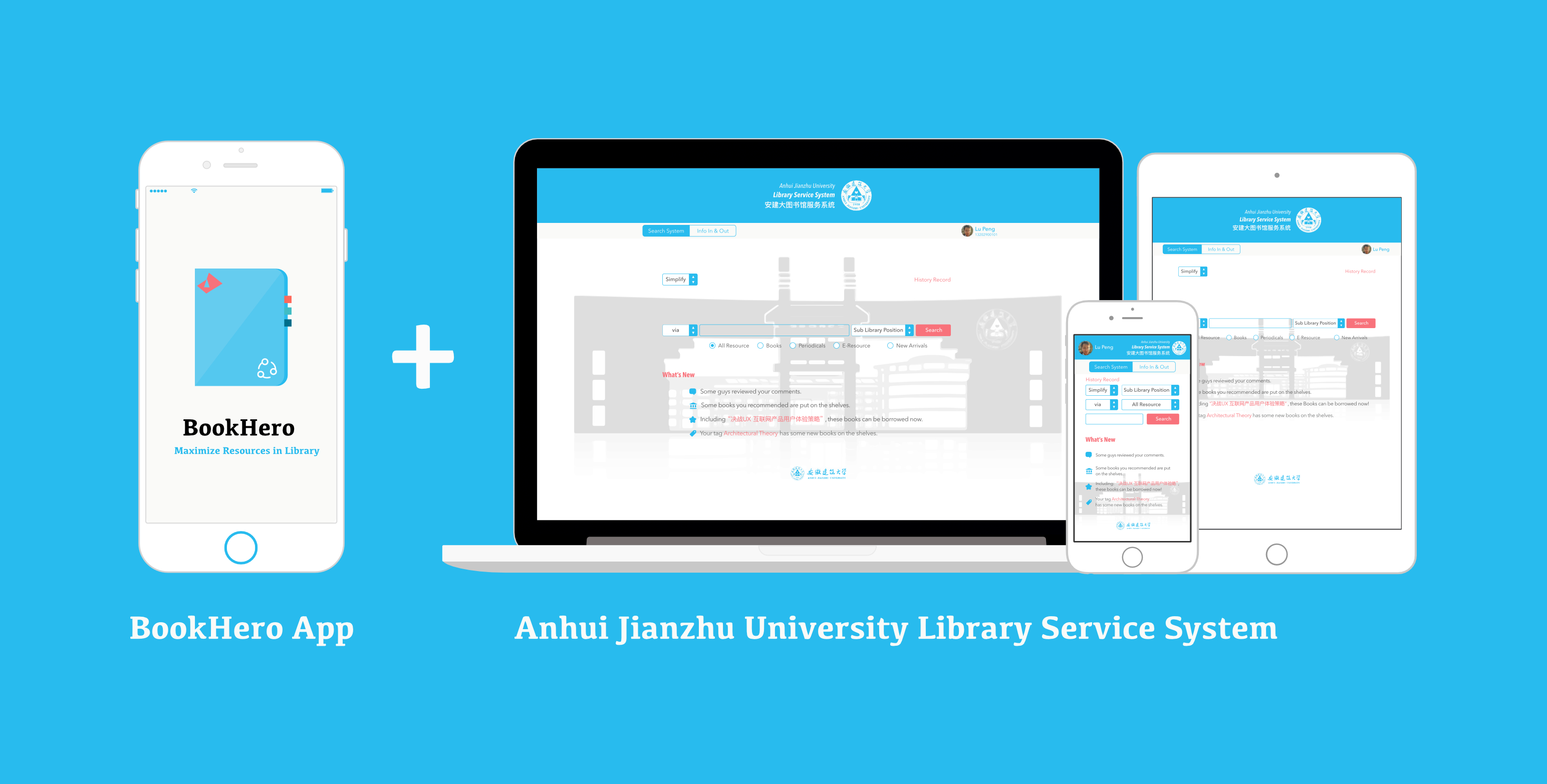
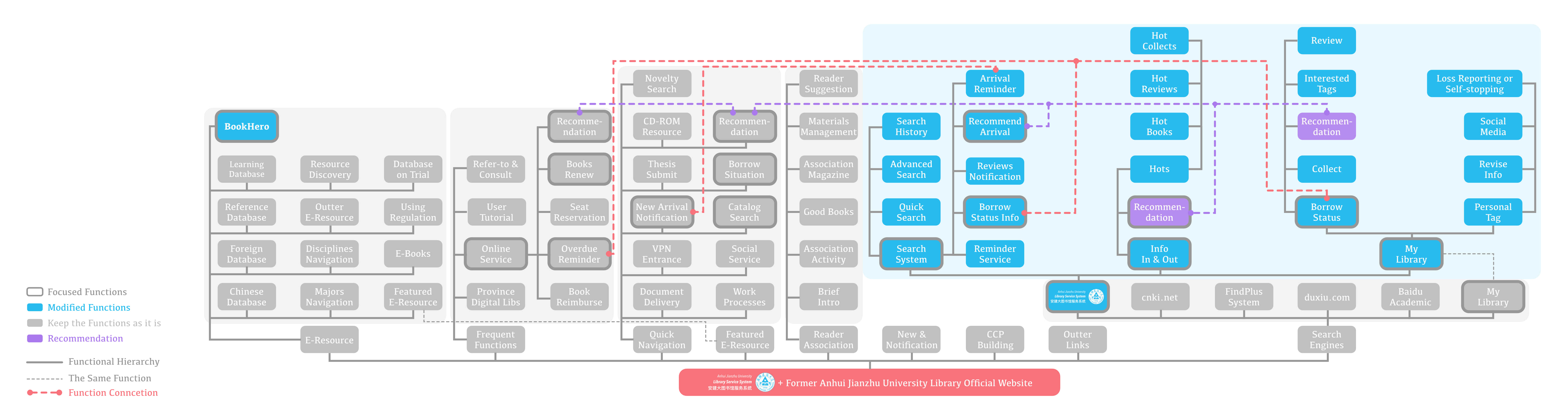
The Function Architecture of the BookHero System
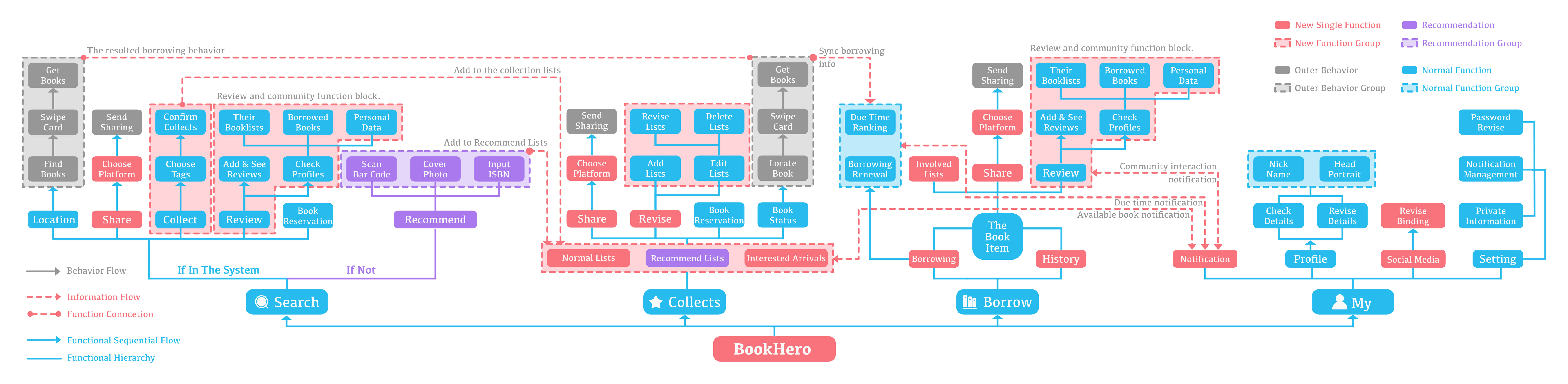
The BookHero App redesign is structured around four interconnected modules—Search, Collects, Borrow, and My—to strategically resolve the core pain points and capitalize on the three design opportunities. These integrated functions work synergistically to replace the previous fragmented touchpoints with a unified, low-friction mobile experience centered on efficient discovery and active user contribution.
App Function Architecture: The Blueprint of Interconnected Modules
Web Information Architecture: The Framework for System Unification
The Selected Artifacts: Responding to Design Opportunities
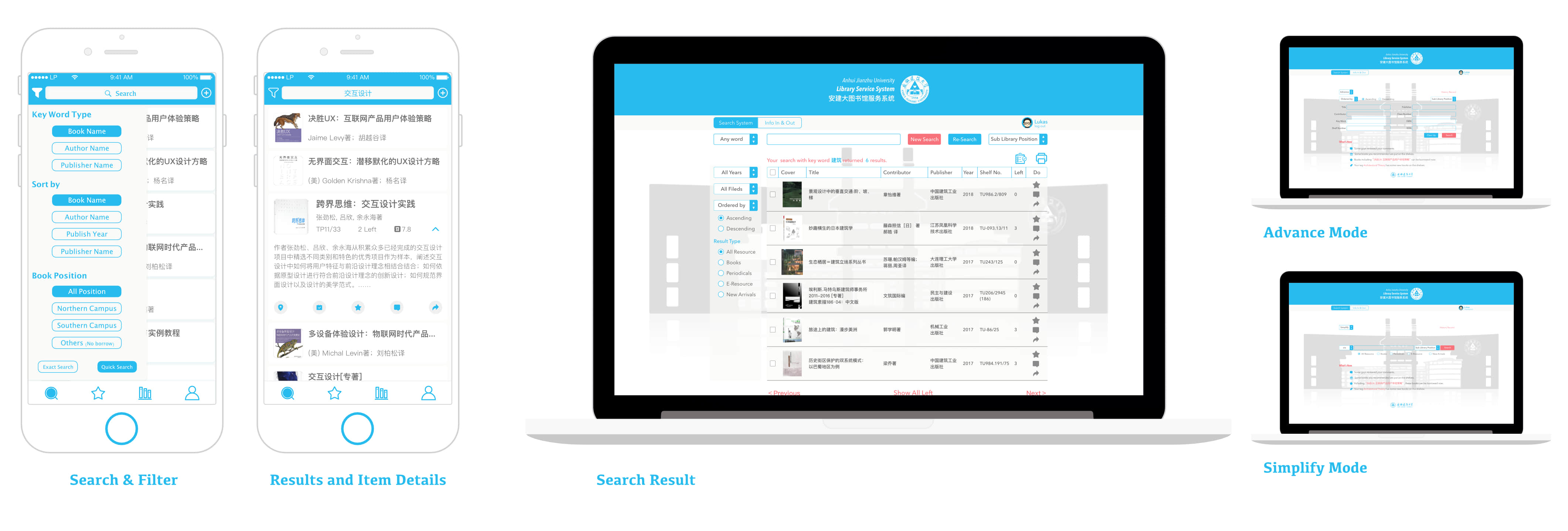
Opportunity #1: Eliminating Information Acquisition Friction
Interaction Flow
User starts at homepage → enters keyword → filter results → selects a book → receives map directions / books the resource / makes comments / shares the book.
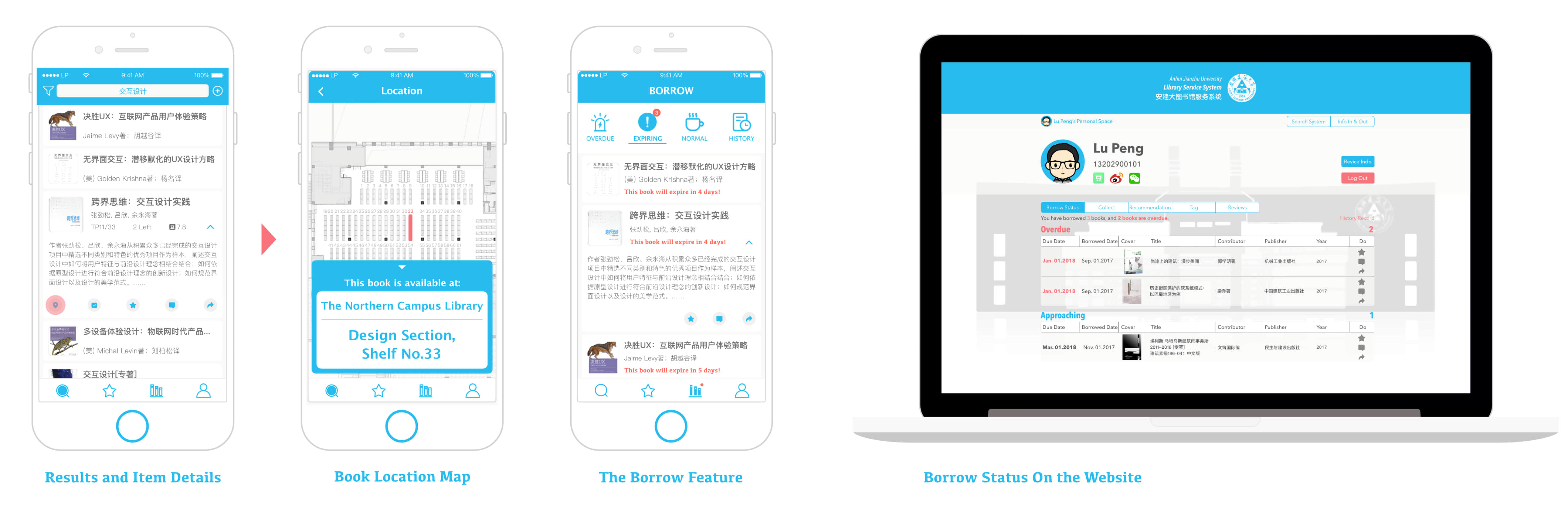
Opportunity #2: Enabling Low-Friction Resource Acquisition
Interaction Flow
-
User selects a book → receives map directions → goes to shelf → checks out.
-
User gets the app notification → checks the expiring borrowed books on app or online → returns the book and reduces the frustration of missing the due date.
Opportunity #3: Incentivizing Community Co-Construction & Assessment
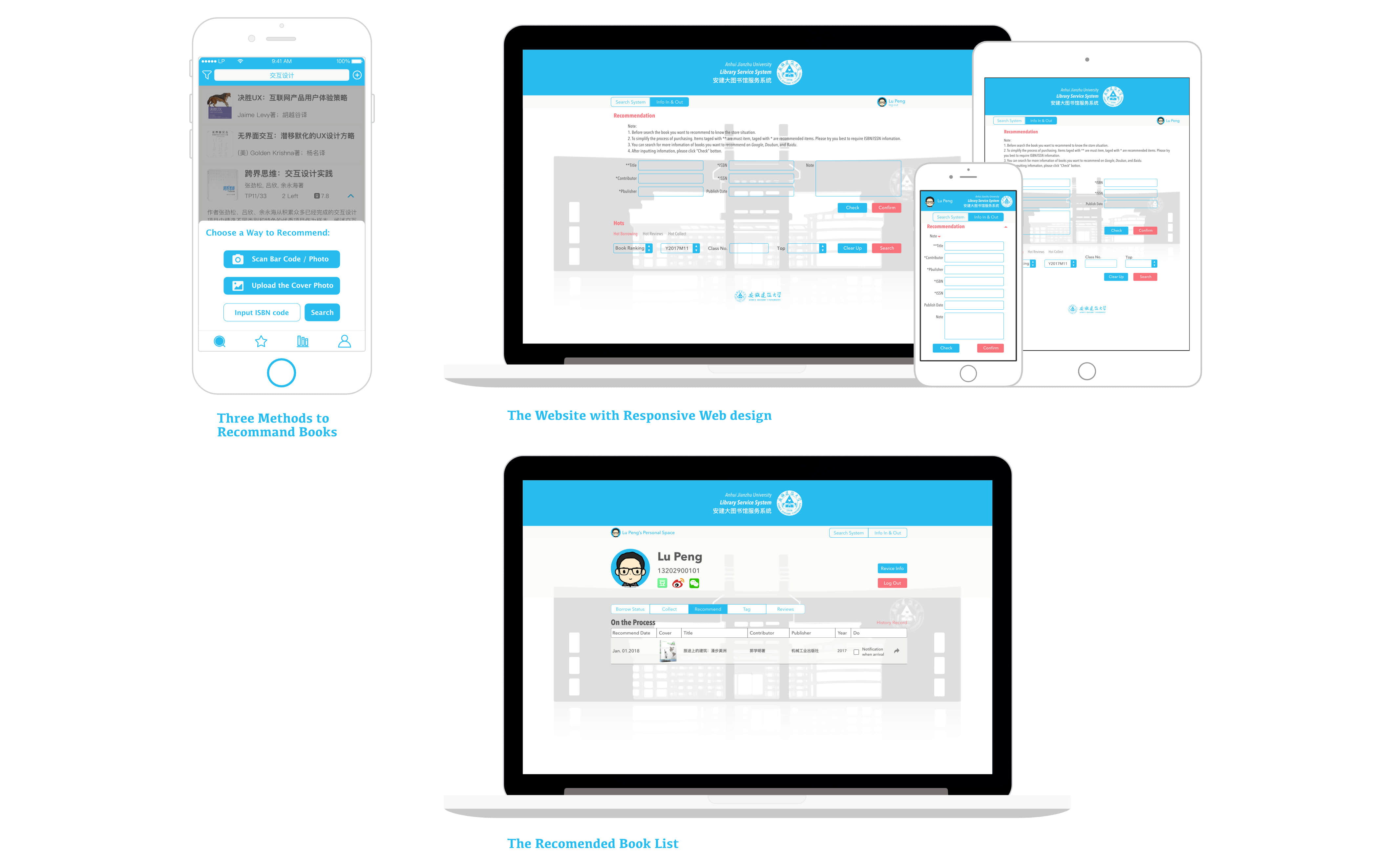
Low-Friction Users’ Library-Contribution Channel.
Key Outcomes
The prototype was evaluated through informal usability walkthroughs, revealing opportunities to simplify navigation between reading states.
The BookHero proposal successfully closes the strategic loop identified in the initial research. By resolving fragmented touchpoints and the structural bottleneck of contribution, the platform shifts the library from passive storage to active discovery and user co-construction.
What I learned
-
This project highlighted how library services operate as socio-technical systems rather than purely functional infrastructures. Through parallel research into institutional processes and student participation practices, I became more aware of how design interventions must negotiate organizational logics, policies, and user agency simultaneously.
-
The most difficult aspect of the design process was translating qualitative insights into actionable service-level decisions without oversimplifying the complexity of the system. This required iterative reframing of insights and constant alignment between research findings and design intent.
-
In future iterations, I would expand the research to include longitudinal observation in order to better understand how participation and engagement evolve over time within institutional contexts.
This page presents a curated overview of the project. The full case includes detailed research, design iterations, and reflections.
Read full case